

CLASSIC LITERATURE
Nicomachean Ethics Of Aristotle, William Fitzgerald, Gift Inscription by Author, 1850 1st Edition
£400.00
 GBP
GBP
 AED
AED
 AFN
AFN
 ALL
ALL
 AMD
AMD
 ANG
ANG
 AOA
AOA
 ARS
ARS
 AUD
AUD
 AWG
AWG
 AZN
AZN
 BAM
BAM
 BBD
BBD
 BDT
BDT
 BGN
BGN
 BHD
BHD
 BIF
BIF
 BMD
BMD
 BND
BND
 BOB
BOB
 BRL
BRL
 BSD
BSD
 BTN
BTN
 BWP
BWP
 BYN
BYN
 BZD
BZD
 CAD
CAD
 CDF
CDF
 CHF
CHF
 CLF
CLF
 CLP
CLP
 CNH
CNH
 CNY
CNY
 COP
COP
 CRC
CRC
 CUC
CUC
 CUP
CUP
 CVE
CVE
 CZK
CZK
 DJF
DJF
 DKK
DKK
 DOP
DOP
 DZD
DZD
 EGP
EGP
 ERN
ERN
 ETB
ETB
 EUR
EUR
 FJD
FJD
 FKP
FKP
 GEL
GEL
 GGP
GGP
 GHS
GHS
 GIP
GIP
 GMD
GMD
 GNF
GNF
 GTQ
GTQ
 GYD
GYD
 HKD
HKD
 HNL
HNL
 HRK
HRK
 HTG
HTG
 HUF
HUF
 IDR
IDR
 ILS
ILS
 IMP
IMP
 INR
INR
 IQD
IQD
 IRR
IRR
 ISK
ISK
 JEP
JEP
 JMD
JMD
 JOD
JOD
 JPY
JPY
 KES
KES
 KGS
KGS
 KHR
KHR
 KMF
KMF
 KPW
KPW
 KRW
KRW
 KWD
KWD
 KYD
KYD
 KZT
KZT
 LAK
LAK
 LBP
LBP
 LKR
LKR
 LRD
LRD
 LSL
LSL
 LYD
LYD
 MAD
MAD
 MDL
MDL
 MGA
MGA
 MKD
MKD
 MMK
MMK
 MNT
MNT
 MOP
MOP
 MRU
MRU
 MUR
MUR
 MVR
MVR
 MWK
MWK
 MXN
MXN
 MYR
MYR
 MZN
MZN
 NAD
NAD
 NGN
NGN
 NIO
NIO
 NOK
NOK
 NPR
NPR
 NZD
NZD
 OMR
OMR
 PAB
PAB
 PEN
PEN
 PGK
PGK
 PHP
PHP
 PKR
PKR
 PLN
PLN
 PYG
PYG
 QAR
QAR
 RON
RON
 RSD
RSD
 RUB
RUB
 RWF
RWF
 SAR
SAR
 SBD
SBD
 SCR
SCR
 SDG
SDG
 SEK
SEK
 SGD
SGD
 SHP
SHP
 SLE
SLE
 SLL
SLL
 SOS
SOS
 SRD
SRD
 SSP
SSP
 STD
STD
 STN
STN
 SVC
SVC
 SYP
SYP
 SZL
SZL
 THB
THB
 TJS
TJS
 TMT
TMT
 TND
TND
 TOP
TOP
 TRY
TRY
 TTD
TTD
 TWD
TWD
 TZS
TZS
 UAH
UAH
 UGX
UGX
 USD
USD
 UYU
UYU
 UZS
UZS
 VES
VES
 VND
VND
 VUV
VUV
 WST
WST
 XAF
XAF
 XCD
XCD
 XCG
XCG
 XOF
XOF
 XPF
XPF
 YER
YER
 ZAR
ZAR
 ZMW
ZMW
 ZWG
ZWG
 ZWL
ZWL
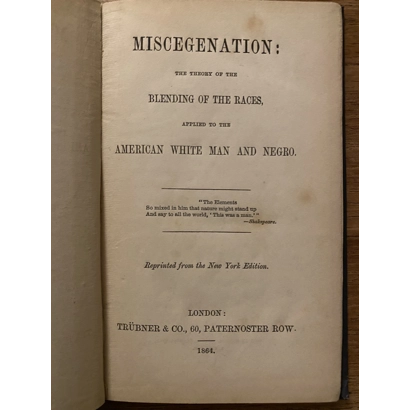
The Miscegenation Hoax: An Exploration of Racial Propaganda and Political Manipulation
Introduction
The term "miscegenation" refers to the interbreeding of people considered to be of different racial types. It is a term historically loaded with racial anxieties, particularly in the United States during the 19th and 20th centuries. One of the most notorious episodes related to this concept is the "Miscegenation Hoax" of 1863, a piece of political propaganda designed to exploit and exacerbate these anxieties during a turbulent period in American history. This blog explores the origins, purpose, and impact of the Miscegenation Hoax, analyzing how it was used as a tool of political manipulation and examining its legacy in the broader context of race relations in the United States.
The Origins of the Miscegenation Hoax
The Miscegenation Hoax originated in the context of the American Civil War, a time when the nation was deeply divided over issues of slavery and race. In December 1863, two Democratic journalists, David Goodman Croly and George Wakeman, published a pamphlet titled "Miscegenation: The Theory of the Blending of the Races, Applied to the American White Man and Negro." The pamphlet, presented as a serious scholarly work, argued in favor of the interbreeding of white and Black Americans as a means of improving the human race. However, the true intent of the pamphlet was far more sinister.
Unbeknownst to many readers, the pamphlet was a satirical and fraudulent work, designed to discredit the Republican Party and the abolitionist movement. Croly and Wakeman, aligned with the Democratic Party, sought to exploit the fears of interracial relationships among white Americans, particularly in the Northern states. By falsely attributing the pamphlet's pro-miscegenation views to prominent Republicans, they aimed to alienate white voters and undermine support for the Union cause.
The Political Context
The Miscegenation Hoax must be understood within the broader political context of the time. The Democratic Party, particularly in the North, was deeply opposed to President Abraham Lincoln and his policies, including the Emancipation Proclamation, which had been issued earlier in 1863. Democrats often accused Republicans of promoting racial equality and of wanting to integrate Black Americans into white society on equal terms—an idea that was highly controversial and widely rejected by many white voters at the time.
By creating a fake document that appeared to endorse interracial marriage, Croly and Wakeman aimed to stoke racial fears and drive a wedge between the Republican Party and its white constituents. The pamphlet used pseudoscientific language and made bold claims about the supposed benefits of racial mixing, knowing that such arguments would provoke outrage and revulsion among many readers.
The Impact of the Hoax
Initially, the Miscegenation Hoax achieved its intended effect. The pamphlet was widely circulated and generated considerable controversy. Many Republicans, unaware of the pamphlet's true origins, distanced themselves from its ideas, while Democrats seized on the document as evidence of Republican radicalism. The hoax even made its way into the political discourse of the 1864 presidential election, where Democrats used it to accuse Lincoln and his supporters of advocating for racial amalgamation.
However, the hoax was eventually exposed. As scholars and journalists investigated the pamphlet's origins, it became clear that it was a product of Democratic operatives rather than a genuine Republican publication. Once the hoax was revealed, its impact diminished, and it became a source of embarrassment for those who had been duped by it.
Despite its exposure, the Miscegenation Hoax had a lasting impact on American political culture. It reinforced the idea that race could be used as a powerful tool of political manipulation, a tactic that would continue to be employed in various forms throughout American history. The hoax also highlighted the deep-seated racial anxieties that existed in the United States, anxieties that would persist long after the Civil War and into the modern era.
Legacy and Conclusion
The Miscegenation Hoax of 1863 is a stark reminder of the ways in which race has been used as a weapon in American politics. It illustrates how propaganda and misinformation can be deployed to exploit societal fears and influence public opinion. The hoax also serves as an early example of "fake news," a phenomenon that remains relevant in today's media landscape.
While the hoax itself may have been a short-lived episode, its legacy endures in the ongoing struggles over race and identity in the United States. The fears and prejudices that Croly and Wakeman sought to exploit have not disappeared; instead, they have evolved and manifested in new ways. Understanding the Miscegenation Hoax and its historical context can provide valuable insights into the persistent challenges of race relations and the politics of division in America.
In conclusion, the Miscegenation Hoax was more than just a political prank; it was a calculated effort to manipulate public opinion and sway an election by playing on the deep-seated racial fears of the time. Its exposure did not erase the damage it caused, and its legacy serves as a cautionary tale about the power of propaganda and the enduring impact of racial prejudice in American society.
Click the link below to view our edition.


